Your Grandpa's Blazer > What You're Wearing Now
The Newness Addiction
The fashion industry has a newness problem. Not a quality problem, not a style problem — a straight-up addiction to "new" for its own sake. Perfectly good garments get tossed because a lapel is half an inch too wide or shoulder pads reminded someone of 1987. Meanwhile the actual material — the thing that took a loom, a mill, and skilled hands months to produce — just... disappears into a landfill. It's like throwing out a cast-iron skillet because it's not the trendy color this season. Insane behavior, honestly.
Tweed Doesn't Pill, It Prevails
Let's talk about wool tweed specifically, because it's the most disrespected fabric in the closet. This stuff was originally woven to survive Scottish moors and English hunting grounds — it's naturally water-resistant thanks to lanolin, it breathes, and it was built with tight, dense weaves that flat-out outperform a lot of what's sold as "premium" today.

Modern fast-fashion tweed is often a wool blend padded out with synthetic filler that pills after two wears and dies in the wash. Vintage tweed doesn't play that game. It was made to last generations, which is exactly the problem when everyone stopped wanting to wear it.
The Great Fabric Treasure Hunt
Here's where it gets interesting: men's blazers and women's wool skirts are both goldmines, but for different reasons. Blazers have personality — structure, tailoring, texture — but a lot of that character is locked into pieces we simply can't use. Lapels, elbow patches, collars: gorgeous details, wrong shapes. We cut around them and let them go. Skirts, on the other hand, are the unsung heroes here. Less structure means more flat, usable yardage — a single wool skirt often yields more usable material than a jacket does, just because the panels are bigger and simpler. So while blazers get more attention for looking "cooler" on a hanger, skirts are quietly doing the heavy lifting in terms of raw material.

The Upgrade Nobody Saw Coming
Zoom out and the bigger picture is genuinely bleak: the fashion industry is one of the most wasteful industries on the planet, and wool sitting in a landfill doesn't just take up space — it breaks down slowly and releases methane while it does it. So every skirt or blazer that gets rescued instead of tossed is a small, physical dent in a very large problem. Not a marketing angle. Just math.
Here's the thing though — upcycling isn't the consolation prize version of fashion. It's not "well, it's not new, but it's fine." Often it's better than new. You're getting denser weaves, better wool, and a piece of material with an actual history instead of something churned out last month by a machine that also made ten thousand identical ones. That's not a trade-down. That's an upgrade with a backstory.
We didn't invent this idea — we just got annoyed enough at watching good tweed get thrown away to do something about it. Every pair of shoes we make is proof this isn't a nice theory. It's just what happens when you refuse to let good material go to waste.
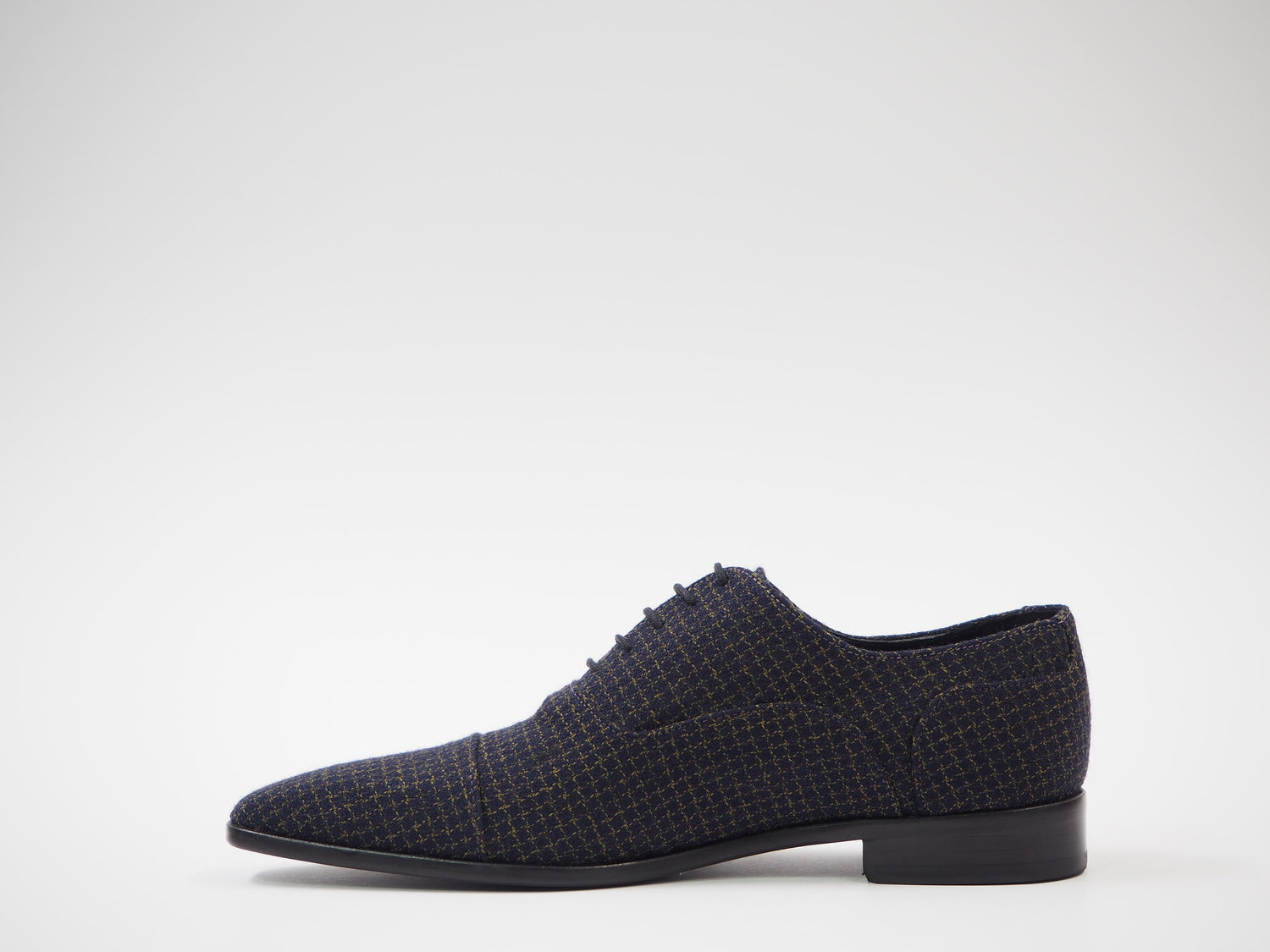
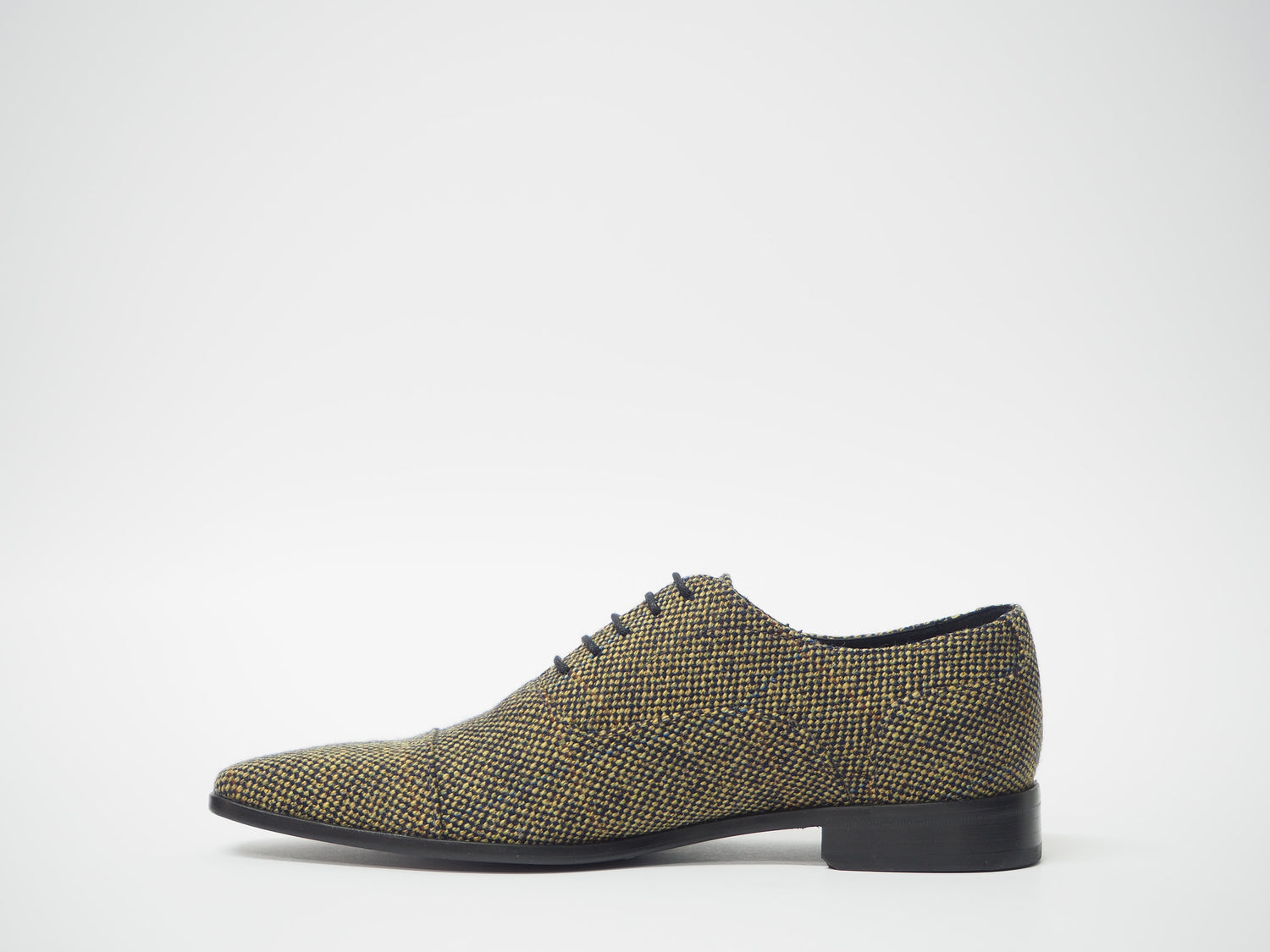
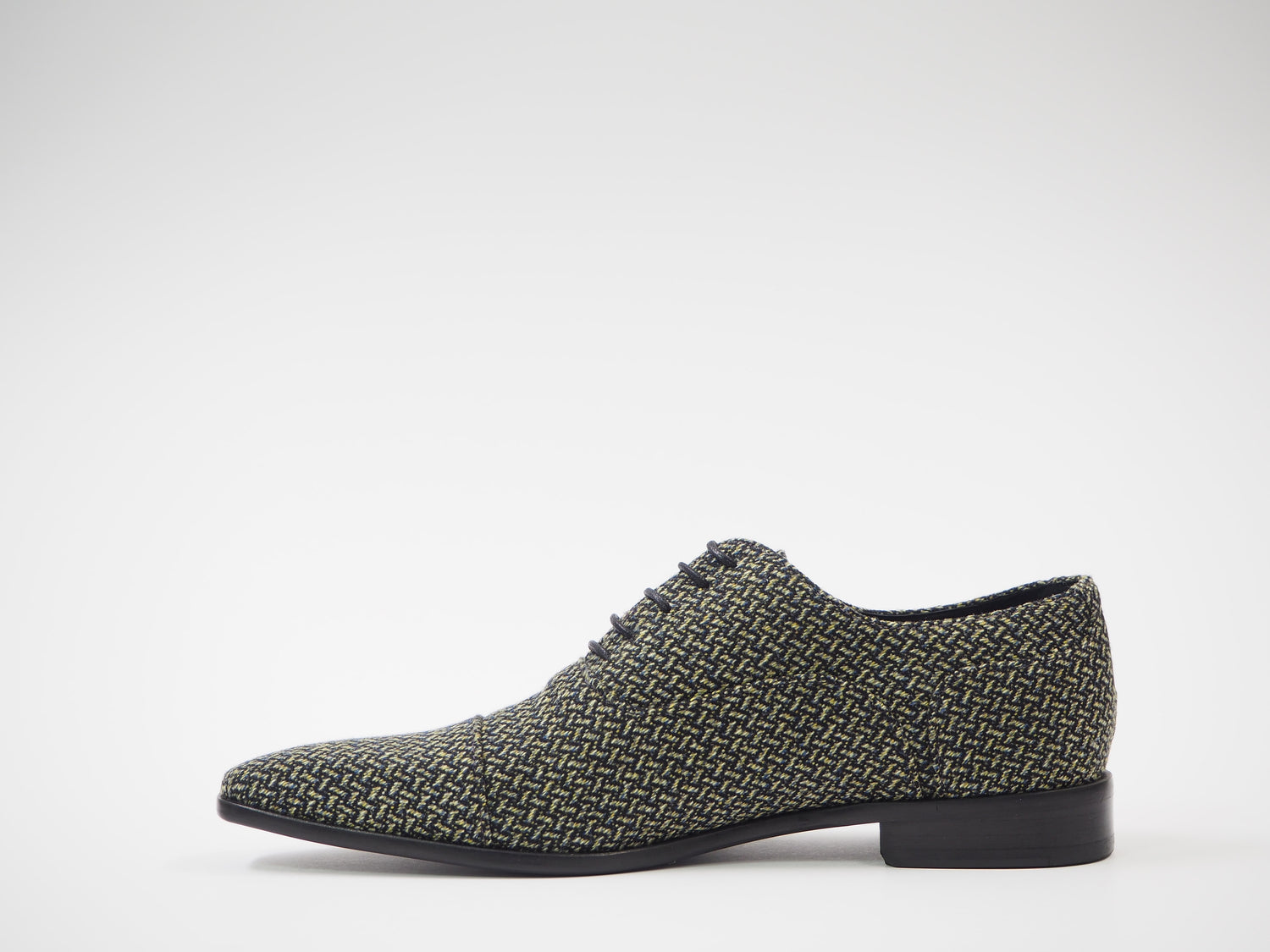
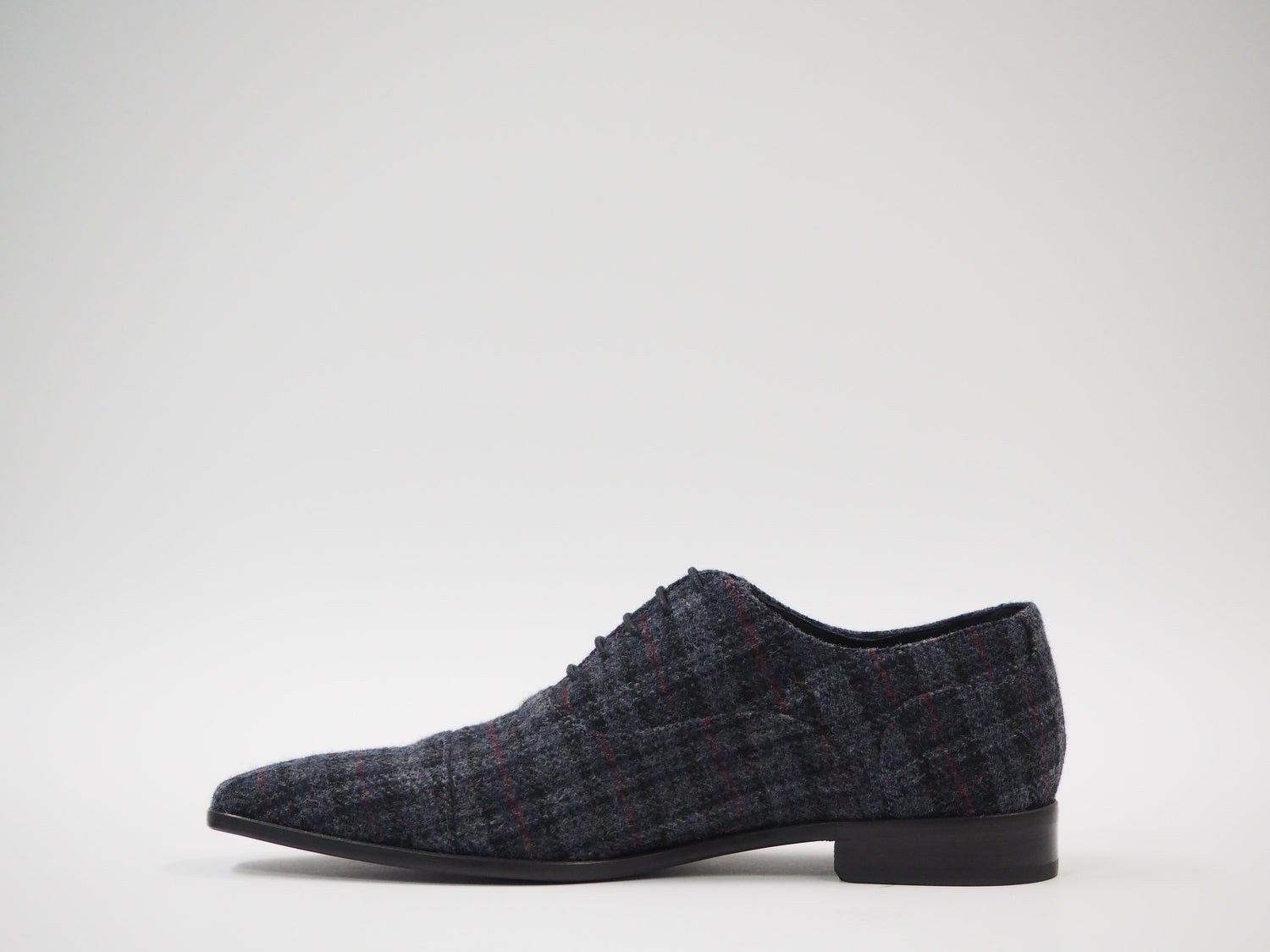
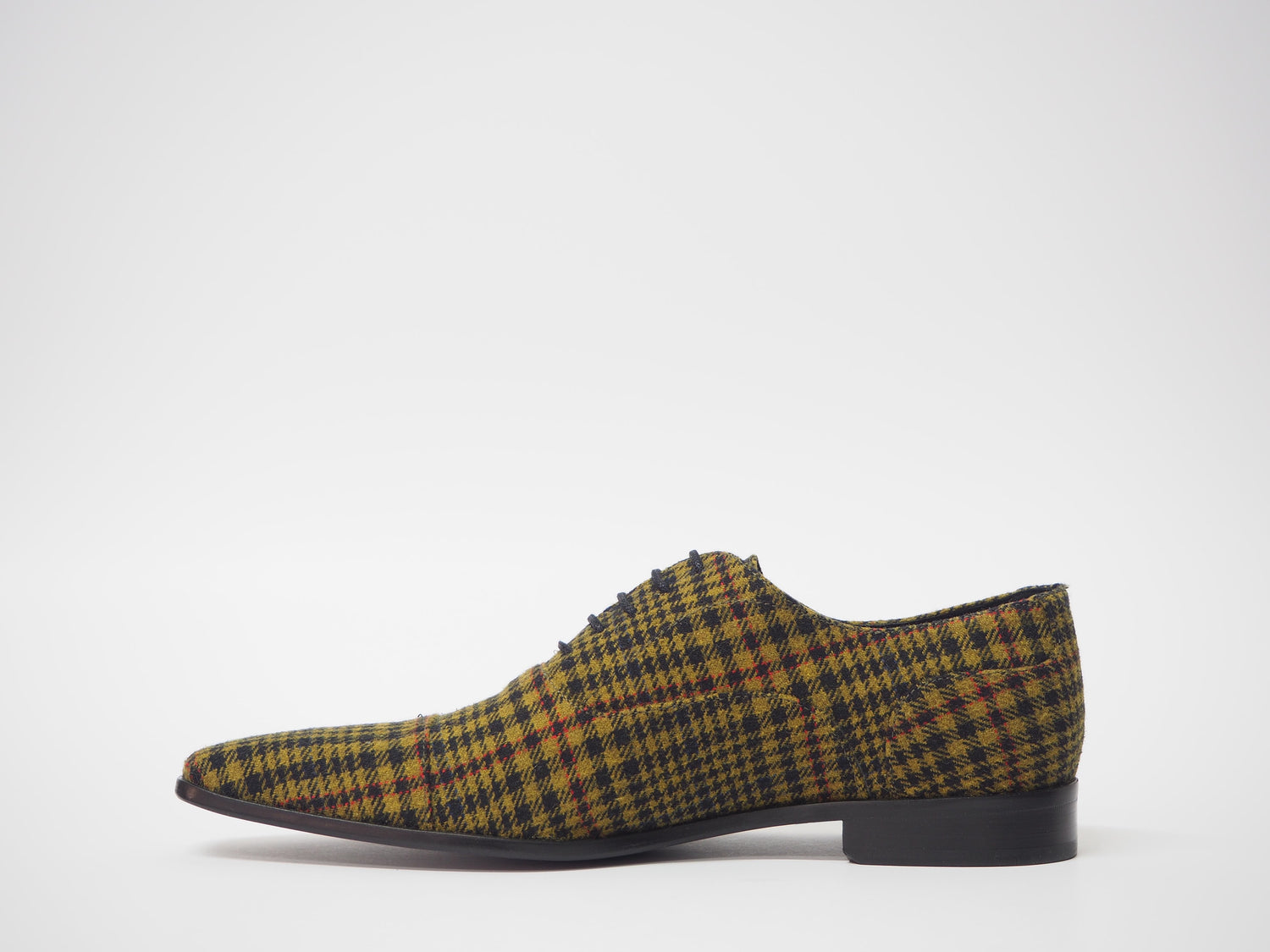
Below is our first shipment from Spain. On the left you can see the gray, white, and orange tweed skirt above transformed into the pair that I now wear.

Here's another of my favorites that can be worn with light blue jeans and a neutral T-shirt: Brown & Blue Men's Dress Shoes + Belt.